Food Safety
McDonald’s Allergens and Food Safety: What Actually Happens in the Kitchen
A working chef’s explanation of shared fryers, grill surfaces, glove changes and why an allergen list is never the whole story.
By Chef Muhammad Khan · Published 2026-09-23 · Updated 2026-09-23
 McDonald’s Allergens and Food Safety: What Actually Happens in the KitchenFoodX
Quick answer
Quick answer
McDonald’s publishes allergen information for its menu items, but the company also states plainly that normal kitchen operations involve shared cooking and preparation areas, equipment and utensils, so contact between foods is possible. If you have a diagnosed allergy, read the allergen information for your country, speak to the restaurant manager before ordering, and follow the advice of your own clinician rather than a general list.
Educational information only. Nutritional needs differ from person to person, and this guide is not medical or dietary advice. Speak to a doctor or registered dietitian for personal nutrition, allergy or medical guidance.
An ingredient list and a kitchen are two different things
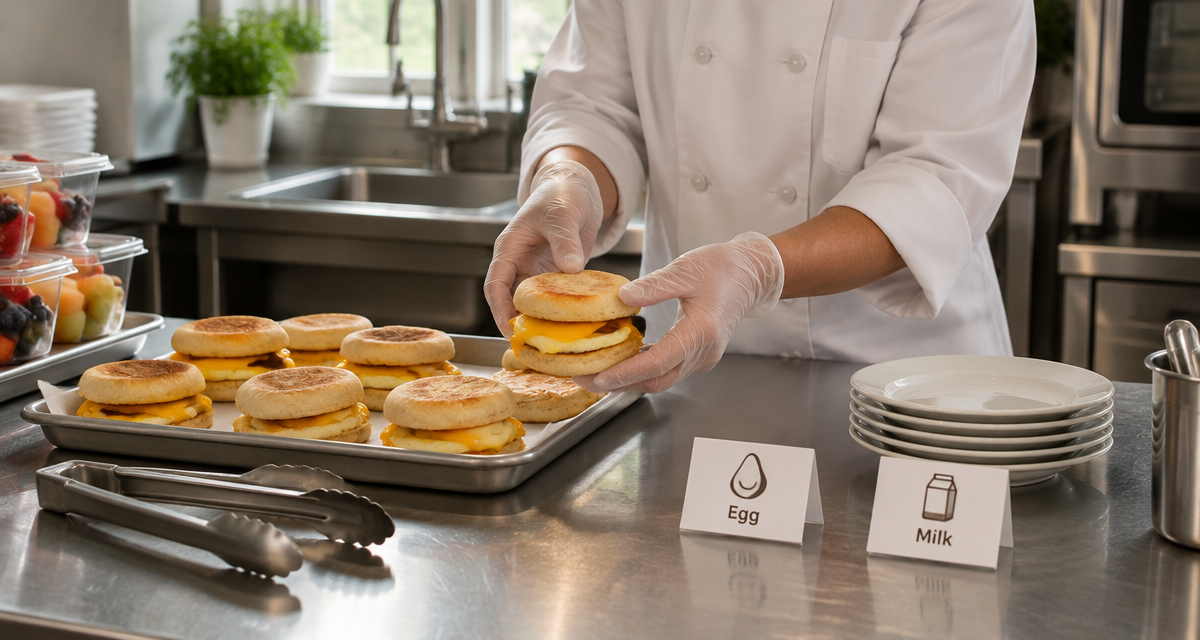
I have spent enough shifts on a hot line to know that a printed ingredient list describes a recipe, not a room. In a busy kitchen, food moves between a fryer, a grill, a holding cabinet, a prep table and a wrapper station, and every one of those steps involves shared equipment.
McDonald’s says this openly in its own allergen notice: despite precautions, normal kitchen operations may involve shared cooking and preparation areas, equipment and utensils, and the possibility exists for food items to come into contact with other products, including allergens. That sentence deserves more attention than it usually gets.

Where cross-contact realistically happens
If you are managing an allergy, it helps to know which points in a fast-food kitchen carry the most risk. None of this is unique to one brand; it is simply how high-volume frying and griddling works.
- Shared fryer oil: items cooked in the same oil share whatever is in it, which matters for fish, breaded coatings and seasoning carry-over.
- Grill and griddle surfaces: eggs, sausage, beef and bread can meet the same hot surface across a shift.
- Tongs, spatulas and scoops: the fastest route for protein residue to travel between products.
- Assembly stations: cheese slices, sauces and buns sit within centimetres of each other during a rush.
- Gloves: gloves protect the food from hands, not one food from another, unless they are changed between tasks.
The nine allergens the U.S. information covers
In the United States, published allergen information addresses the nine major allergens identified by the FDA. Other countries maintain their own lists, so an allergen sheet from one market should never be used to order in another.
| Allergen group | Where it commonly appears on a fast-food menu | Practical note |
|---|---|---|
| Eggs | Breakfast sandwiches, some sauces | Ask whether egg is cooked on a shared surface |
| Milk / dairy | Cheese, shakes, coffee drinks, some buns | Removing cheese does not remove dairy from a milk-based drink |
| Wheat | Buns, muffins, biscuits, breaded coatings | Bun-free does not always mean wheat-free |
| Soy | Oils, some sauces and breads | Frequently present as an oil or emulsifier |
| Peanuts and tree nuts | Desserts and toppings in some markets | Availability differs widely by country |
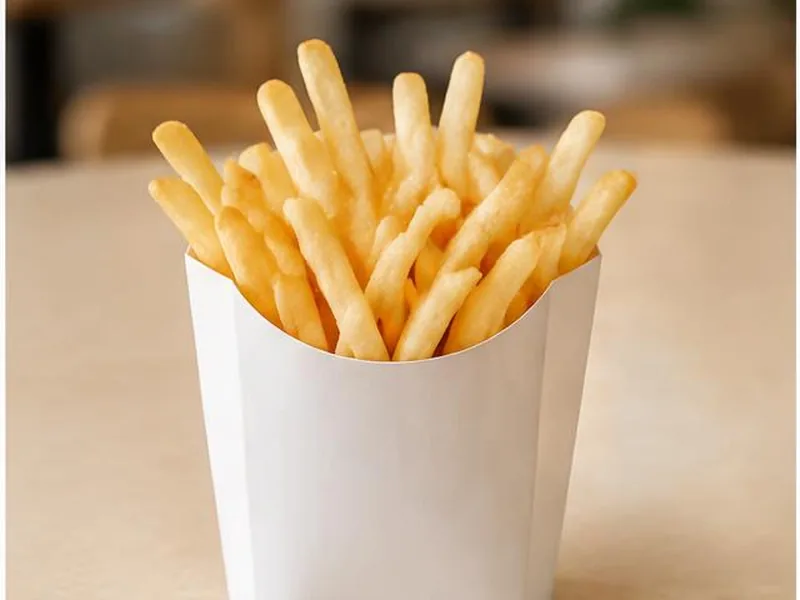
| Fish and shellfish | Fish products where offered | Shared fryer oil is the usual concern |
| Sesame | Some buns | Bun recipes vary by supplier and market |
How to ask well at the counter
Staff cannot redesign a kitchen mid-shift, but a clear, specific question gets a far more useful answer than a vague one. In my experience the best results come from naming the allergen, naming the item, and asking about equipment rather than ingredients alone.
It also helps to order at a quieter time. During a peak rush, a fresh-utensil request competes with a queue; outside it, the same request is straightforward.
- Say which allergen and how serious the reaction is.
- Ask whether the item is cooked in shared oil or on a shared surface.
- Ask for a glove and utensil change before your item is prepared.
- Check the current allergen information for your country yourself before you order.
Food safety basics that affect flavour too
Temperature control, holding times and clean equipment are safety rules first, but they also explain quality. A sandwich that has sat past its holding window is safe within the window and simply worse to eat once texture goes; fries lose their crisp long before anything else changes.
If you want food at its best, order items that are cooked to order where possible, and eat fried food promptly. That is not a health claim — it is kitchen practice.

Market and price notes
The examples below describe the U.S. menu. Recipes, portion sizes, seasoning and availability differ between countries and can change without notice, so confirm the current figures for the restaurant where you are ordering.
Prices may vary by location and are subject to change.
Final takeaway
Allergen lists are useful and worth reading, but they describe recipes rather than kitchens. For a diagnosed allergy, combine the published information for your country with a direct conversation at the restaurant and advice from your own clinician.
Prices may vary by location and are subject to change.
Frequently asked questions
Sources and methodology
Official U.S. product pages were used for current product names and calories. Protein figures are presented as approximate where independent nutrition references were needed; use the live official calculator for the latest customized result.
About the author
Chef Muhammad Khan
Chef · Food Safety Diploma holder · Menu researcher at FoodX
Muhammad Khan is a working chef and Food Safety diploma holder who has spent his career in commercial kitchens, where fryer sequencing, grill separation, holding times and allergen handling are daily routine. At FoodX he reviews published fast-food menu information, explains how kitchen practice shapes what actually arrives in the bag, and writes ordering guides for readers who want practical detail instead of diet hype.
- Food Safety diploma holder (commercial kitchen hygiene and allergen handling)
- Professional cooking background in high-volume kitchens
- Reviews every nutrition figure against the restaurant's current published information
Keep reading
Browse the full menu directory, breakfast menu, calorie tables, our nutrition explainer or prices by country.